

There’s something irresistible about homemade doughnuts. The smell of warm dough frying, the soft cloud-like centers, and that final snowfall of powdered sugar that melts the second it touches the surface—it’s pure kitchen happiness.
Homemade doughnuts might sound intimidating, but the truth is they’re surprisingly simple when you know the secrets. With the right dough, proper proofing, and perfectly heated oil, you can create bakery-level doughnuts right in your own kitchen.
And yes… they’ll be lighter, fluffier, and fresher than anything from a store.
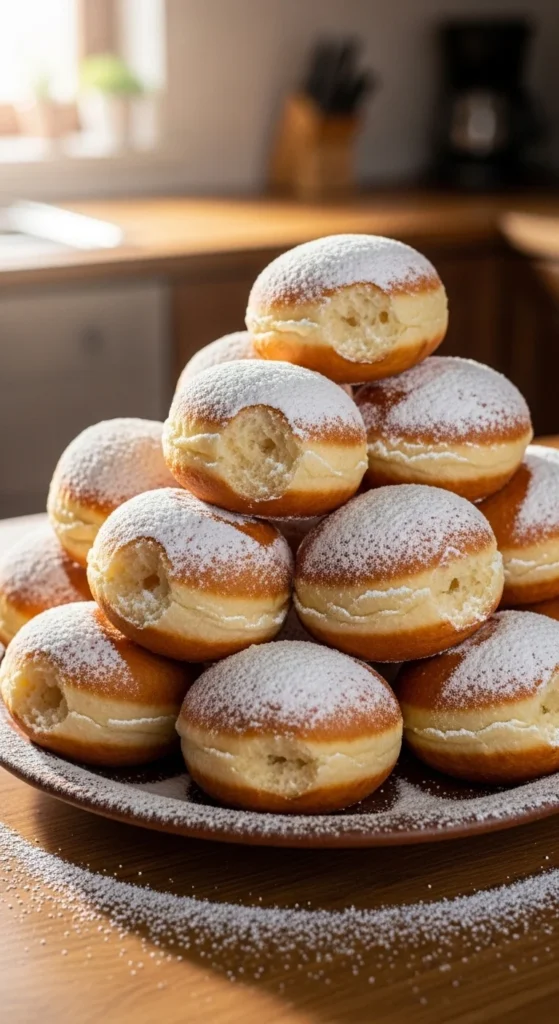
Let’s break down exactly how to make them perfect every time.
The Secret Behind Ultra-Fluffy Doughnuts
Great doughnuts are all about structure and air.
Instead of dense fried dough, we want a soft, pillowy interior with a delicate golden crust.
Here are the key techniques that make that happen:
- Activate yeast in warm milk (100–110°F)
- Use high-hydration dough (65–70%)
- Allow an overnight cold proof
- Fry at 375°F for even color and texture
- Dust with powdered sugar while warm
These small details create doughnuts that are:
- Light instead of heavy
- Tender instead of chewy
- Crisp outside, fluffy inside
Once you try this method, you’ll never go back.
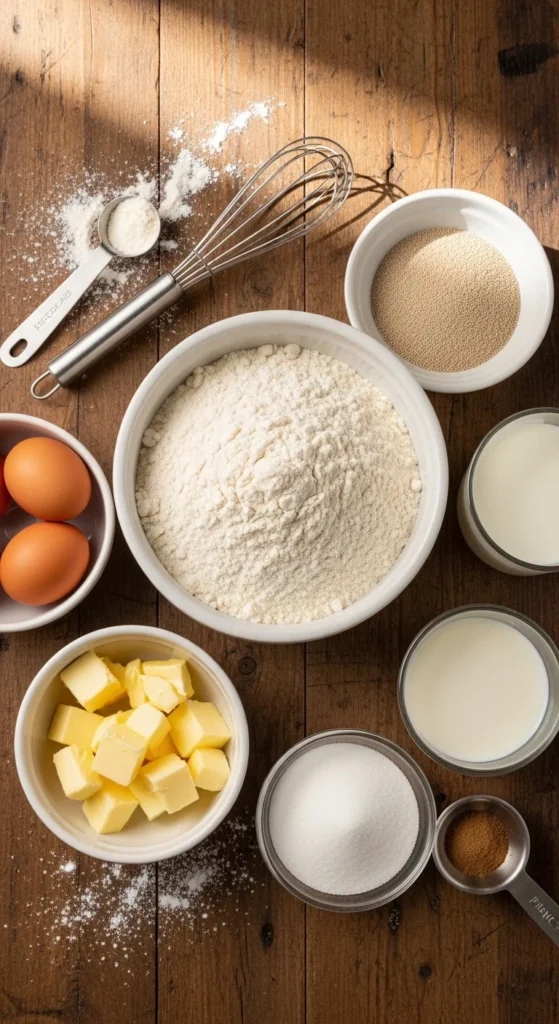
Ingredients That Make the Magic
Simple ingredients, but each plays a role in creating that perfect bite.
Doughnut Dough
- 1 cup warm milk (105°F)
- 2¼ teaspoons instant yeast
- ⅓ cup sugar
- 2 large eggs (room temperature)
- ¼ cup butter, softened
- 2 teaspoons vanilla extract
- 4–5 cups bread flour
- ½ teaspoon nutmeg
- 1 teaspoon salt
Optional softness booster:
- ¼ cup mashed potato or potato flakes
For frying:
- Vegetable oil
For finishing:
- 2 cups powdered sugar
Why these ingredients work:
- Bread flour builds gluten for fluffy structure.
- Eggs and butter add richness.
- Nutmeg gives classic doughnut shop flavor.
- Potato flakes help retain moisture.
Step 1: Activate the Yeast
Perfect doughnuts start with active yeast.
In a large bowl:
- Warm the milk to about 105°F.
- Stir in sugar.
- Add yeast.
- Let sit 5–10 minutes.
You’re looking for a foamy, bubbly top.
That foam means the yeast is alive and ready to create airy dough.
If nothing happens, the milk was either too hot or too cold.
Step 2: Make the Dough
Add to the yeast mixture:
- Eggs
- Butter
- Vanilla
Mix until smooth.
Gradually add flour, nutmeg, and salt until a soft, slightly sticky dough forms.
This dough should feel softer than bread dough. Higher hydration leads to fluffier doughnuts.
Knead for 8–10 minutes until elastic.
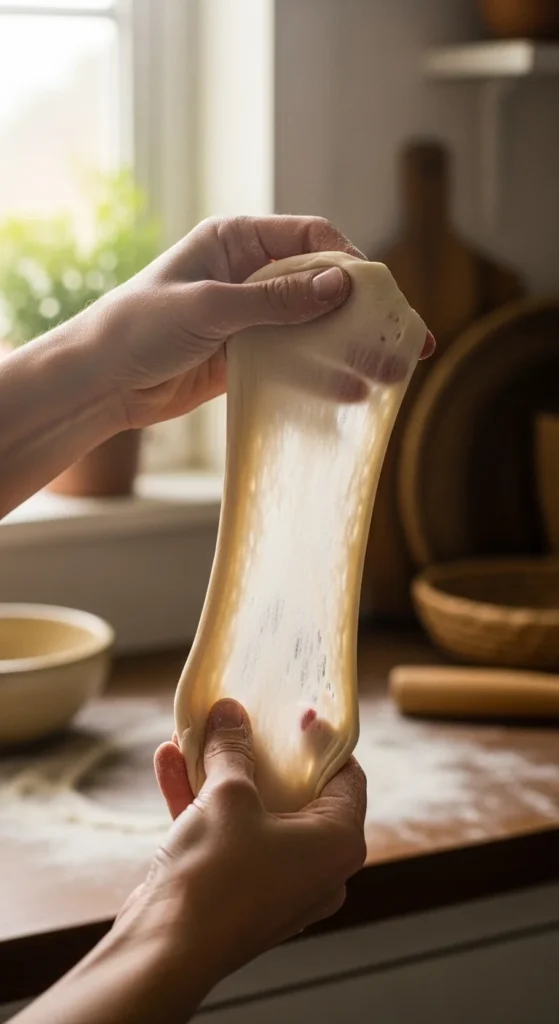
How to test it:
Stretch a small piece of dough.
If it forms a thin sheet without tearing, you’ve passed the windowpane test.
Step 3: The Flavor Boost — Cold Proof Overnight
This is the secret step most recipes skip.
Place the dough in a greased bowl, cover, and refrigerate 8–12 hours.
Why it works:
- Develops deeper flavor
- Strengthens dough structure
- Makes dough easier to handle
- Creates lighter texture
Slow fermentation equals better doughnuts.
If you’re short on time, let it rise at room temperature for about 1 hour, but overnight is worth it.
Step 4: Shape the Doughnuts
Roll chilled dough to ½ inch thickness on a lightly floured surface.
Cut using:
- Doughnut cutter
- Two round cutters
- Or even a glass and bottle cap
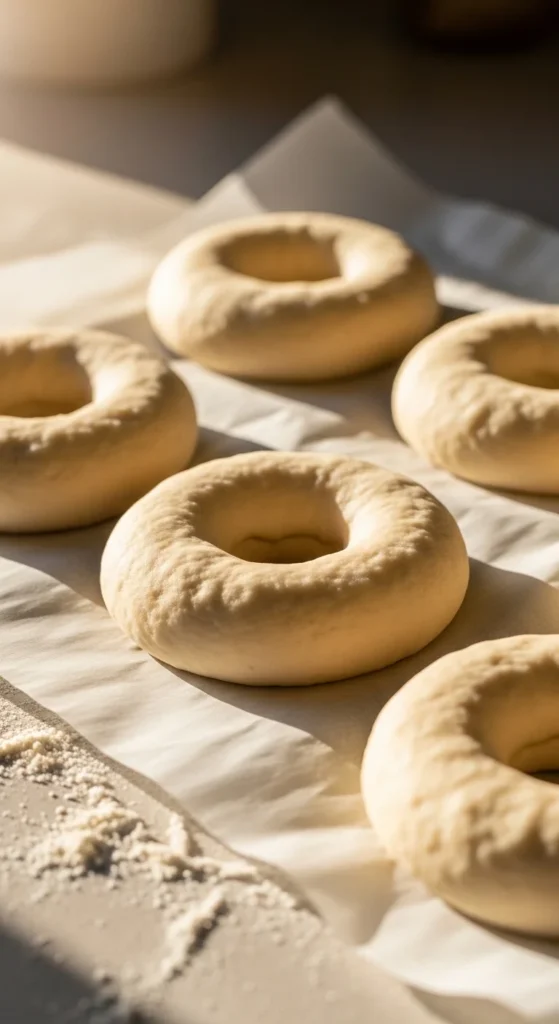
Place rings onto parchment-lined trays.
Let them rise 30–45 minutes until puffy.
You’ll notice they become soft and airy to the touch.
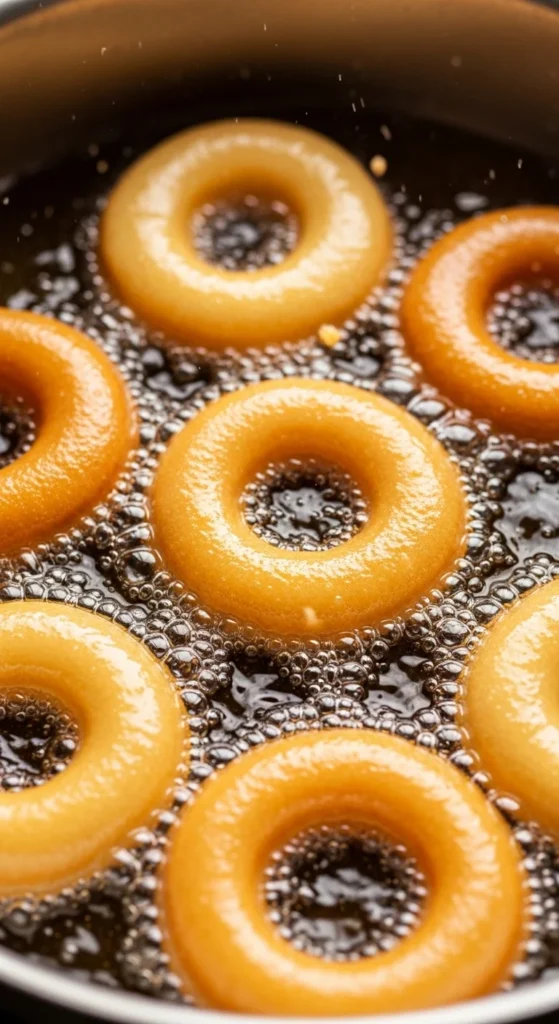
Step 5: Fry at the Perfect Temperature
Frying temperature makes or breaks doughnuts.
Heat oil to 375°F.
A candy thermometer helps keep things consistent.
Carefully add doughnuts and fry:
- 1½–2 minutes per side
They should turn a beautiful golden color.
Avoid overcrowding the pot, which drops the oil temperature and causes greasy doughnuts.
When done:
- Remove with a slotted spoon
- Place on a rack lined with paper towels
This keeps the outside crisp while removing excess oil.
Step 6: The Sweet Magic Finish
Now comes the best part.
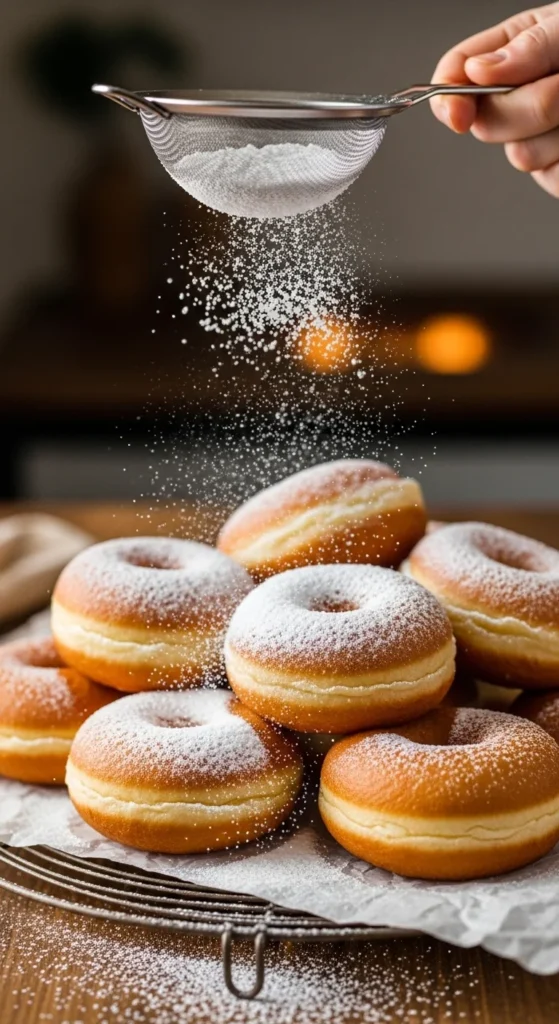
While doughnuts are still warm, coat them in:
- Powdered sugar
- Cinnamon sugar
- Vanilla glaze
Classic bakery style:
Place powdered sugar in a bowl and toss the warm doughnuts until fully coated.
The heat creates a light, melt-in-your-mouth coating.
It’s simple but unforgettable.
Common Doughnut Problems (And Easy Fixes)
Even experienced bakers run into trouble sometimes.
Here’s how to fix it.
Dense doughnuts
Cause:
- Dough too dry
- Not proofed long enough
Fix:
- Slightly stickier dough
- Allow full rise time
Greasy doughnuts
Cause:
- Oil temperature too low
Fix:
- Keep oil between 350–380°F
Tough texture
Cause:
- Overworked dough
Fix:
- Knead just until elastic.
Make-Ahead Tips
Homemade doughnuts can fit into busy schedules.
Try these tricks:
Freeze shaped doughnuts before the final rise.
When ready to cook:
- Thaw
- Let rise
- Fry fresh
You’ll have bakery-quality doughnuts anytime.
Final Thoughts
Fluffy homemade doughnuts are one of those recipes that feel impressive—but they’re really just about good technique and patience.
Remember the golden rules:
- Warm milk activates yeast
- High hydration creates softness
- Overnight proof builds flavor
- 375°F oil prevents greasiness
- Powdered sugar adds the magic
Follow these steps and you’ll end up with doughnuts that are pillowy, golden, and absolutely irresistible.
So grab some flour, heat the oil, and bring a little bakery magic into your kitchen.
Save this recipe for later—you’ll definitely want to make them again. 🍩

Leave a Reply