

Nothing beats the comfort of a bowl of warm noodles you made with your own hands. The best part? You don’t need a pasta machine or fancy gadgets. Just a bowl, a rolling pin, and a knife can turn simple ingredients into soft, chewy noodles ready in under an hour.
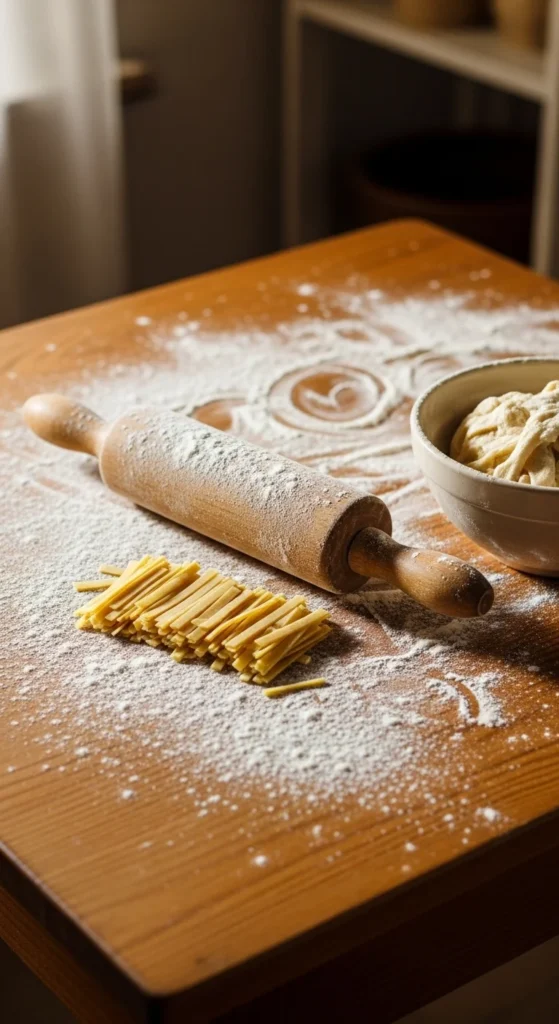
Hand-rolled noodles are surprisingly easy. Once you learn the basic dough and the fold-and-cut method, you can make ramen-style strands, rustic pasta ribbons, or simple soup noodles anytime.
The Simple Ingredients You Need
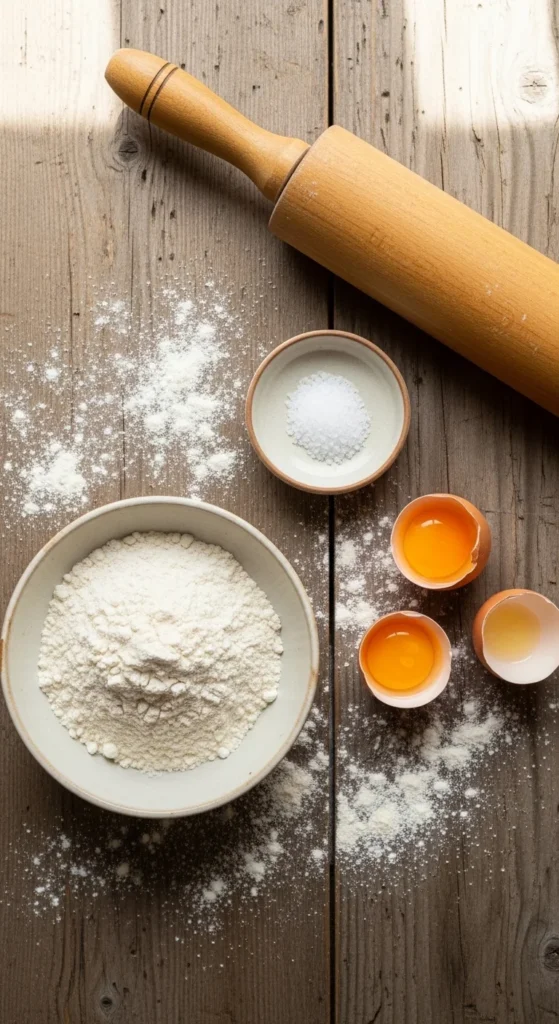
Homemade noodles rely on pantry staples. No complicated ingredients required.
Basic noodle dough
- 2 cups all-purpose flour (about 250g)
- ½ cup water (around 115g)
- ½ tsp salt
Optional for richer noodles:
- 2 eggs instead of water
- Extra flour for dusting
- Cornmeal or semolina to prevent sticking
Mixing flour and water in the right ratio creates a dough that’s soft but easy to roll.
Quick tip
- If dough feels sticky → sprinkle flour
- If dough cracks → add a few drops of water
Small adjustments make a big difference.
Step 1: Mix and Knead the Dough
Start by combining your ingredients in a bowl.
How to do it
- Add flour and salt to a bowl.
- Pour in water or eggs.
- Mix until a rough dough forms.
- Knead on the counter for about 5 minutes.
The dough will feel slightly firm. That’s normal.
Now comes the step many beginners skip.
The 30-Minute Rest
Wrap the dough or cover the bowl and let it sit for 30 minutes.
Why it helps:
- Gluten relaxes
- Dough stops springing back
- Rolling becomes much easier
If you have time, knead briefly again and rest it another 10–15 minutes. The texture improves noticeably.
Step 2: Roll the Dough Thin
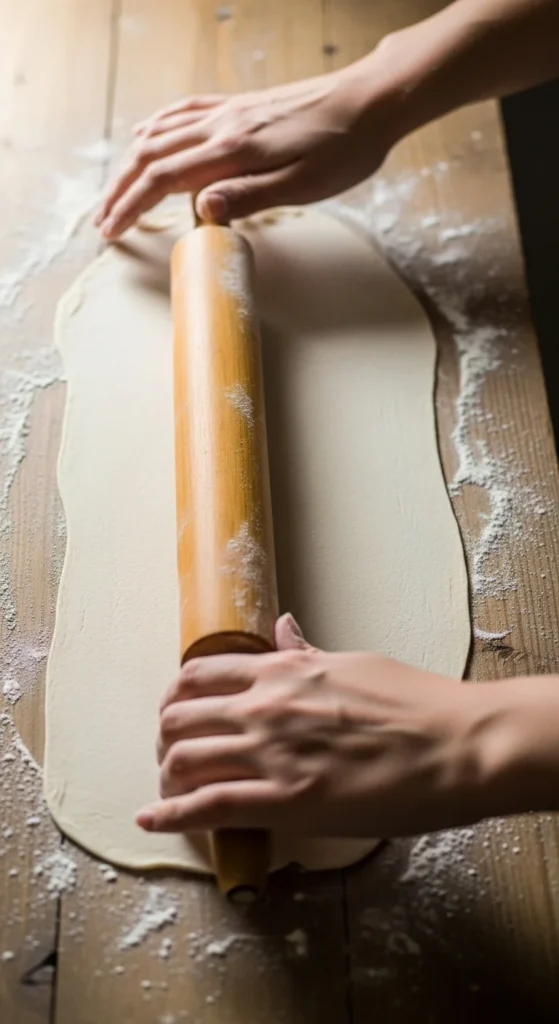
You don’t need a pasta machine. A rolling pin works perfectly.
Steps
- Lightly flour your counter.
- Flatten the dough with your hands.
- Roll outward with a rolling pin.
- Flip the dough often to prevent sticking.
Aim for about 2 mm thickness. Thin dough cooks evenly and creates that classic noodle bite.
Helpful tricks:
- Dust flour as you roll.
- Rotate the dough for even thickness.
- If it shrinks back, let it rest 5 minutes.
Step 3: Fold and Cut the Noodles
This is where the magic happens.
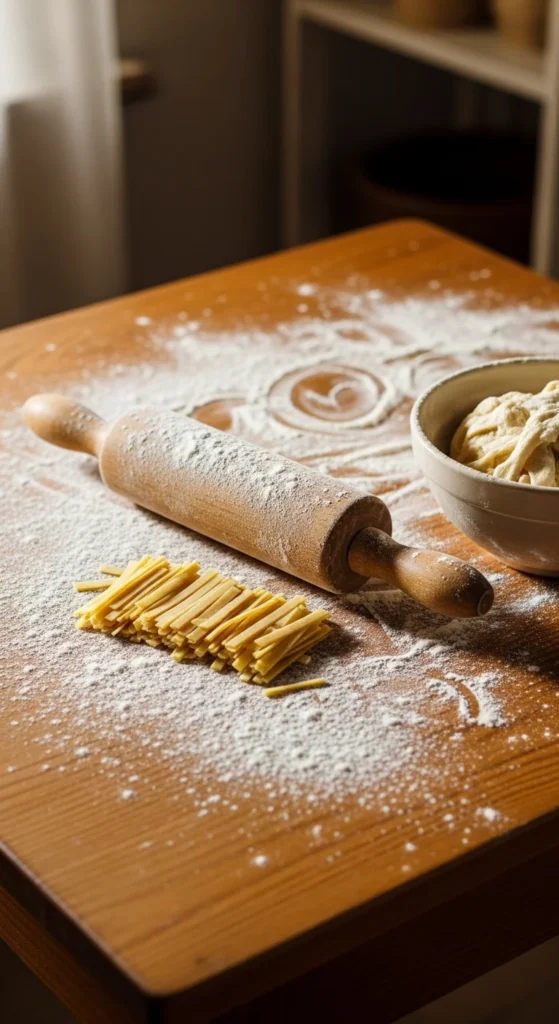
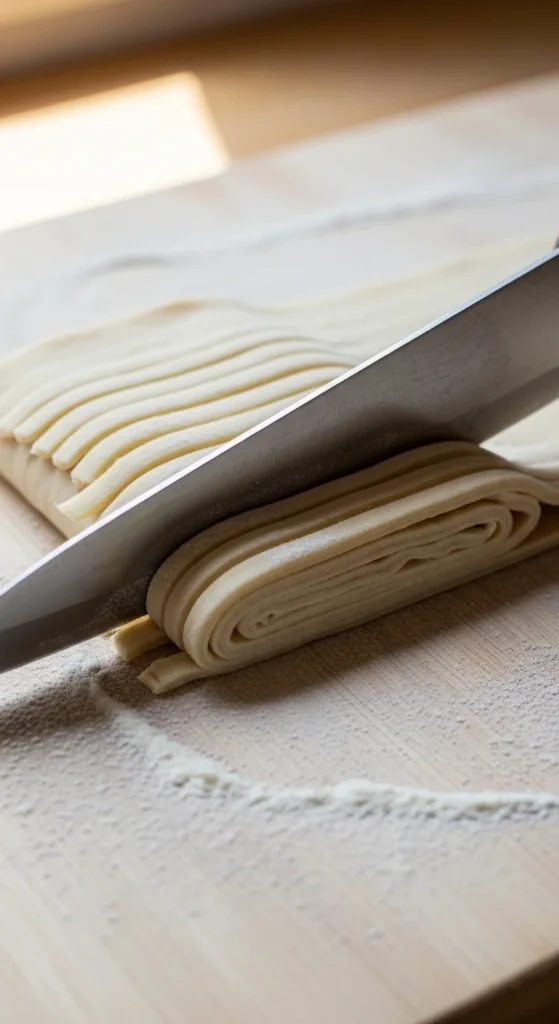
Instead of struggling to cut long strips, use the fold-and-cut method.
How it works
- Dust the rolled dough lightly with flour.
- Fold it into 4–5 loose layers.
- Slice strips with a sharp knife.
Typical noodle sizes:
- Thin noodles → ⅛ inch
- Classic noodles → ¼ inch
- Wide pasta → ½ inch
Once cut, gently lift and shake them loose.
Important step
Toss noodles in a little flour or cornmeal so they don’t stick together.
Step 4: Cook the Fresh Noodles
Fresh noodles cook much faster than dried pasta.
Bring a pot of water to a full boil and add a pinch of salt.
Cooking guide
- Thin noodles: 2 minutes
- Standard noodles: 3–4 minutes
- Thick noodles: up to 5 minutes
A helpful trick many cooks use:
- Add noodles to boiling water.
- Pour in ½ cup cold water.
- Let it return to a boil.
This helps control texture and keeps noodles pleasantly chewy.
Drain and rinse lightly if using for stir-fry or sauces.
Easy Variations to Try
Once you master the base dough, you can change flavors and colors easily.
Egg noodles
- Replace water with 2 eggs.
- Slightly richer taste and yellow color.
Spinach noodles
- Blend spinach with water.
- Mix into the dough.
Beet noodles
- Add beet puree for vibrant color.
Whole wheat noodles
- Replace half the flour with whole wheat flour.
These simple swaps create noodles perfect for soups, stir-fries, or pasta dishes.
Storage Tips
Sometimes you may want to prepare noodles ahead of time.
Short storage
- Dust with flour
- Store in fridge up to 2 days
Air drying
- Spread on tray
- Dry for several hours
Freezing
- Freeze dough balls up to 3 months
- Thaw in fridge before rolling
Keeping noodles loose prevents clumping.
Common Beginner Mistakes
Making noodles by hand gets easier each time. Here are a few problems people run into.
Dough keeps shrinking
Solution: rest the dough longer.
Noodles sticking together
Solution: add more flour or cornmeal after cutting.
Uneven noodles
Solution: roll dough evenly and use a sharp knife.
Even imperfect noodles still taste amazing.
Final Thoughts
Homemade noodles don’t require special machines or complicated techniques. A bowl, flour, and a rolling pin are enough to create a comforting meal from scratch. Once you try the fold-and-cut method, it quickly becomes second nature.
Make a batch tonight, toss them into soup or sauce, and enjoy the difference handmade noodles bring to the table.
Save this idea for later—you’ll want it the next time a noodle craving hits. 🍜

Leave a Reply