

There’s nothing quite like pulling a homemade pizza out of the oven—cheese bubbling, edges puffed and golden, and that irresistible aroma filling your kitchen. 🍕 If you’ve ever struggled with pale, soggy crusts or undercooked centers, you’re not alone. The good news? A perfectly golden pizza crust is absolutely achievable at home—no fancy pizza oven required.
This guide breaks it down step by step, so you can confidently make homemade pizza with a crisp bottom, airy interior, and beautiful color every single time.
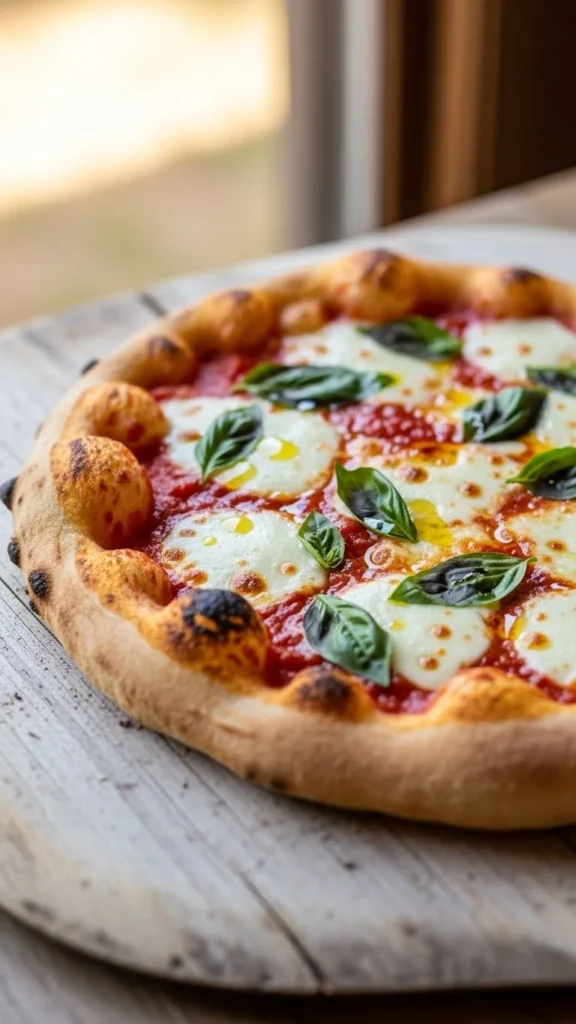
Start With the Right Dough (It Matters More Than You Think)
A golden crust begins long before the pizza hits the oven. The dough sets the foundation.
What makes great pizza dough;
- Bread flour or “00” flour (higher protein = better chew)
- Active yeast (fresh and bubbly)
- Water that’s warm, not hot
- Salt for flavor
- Olive oil for tenderness and color
Key tip:
Hydration matters. Slightly sticky dough creates air pockets that bake into a light, crisp crust.
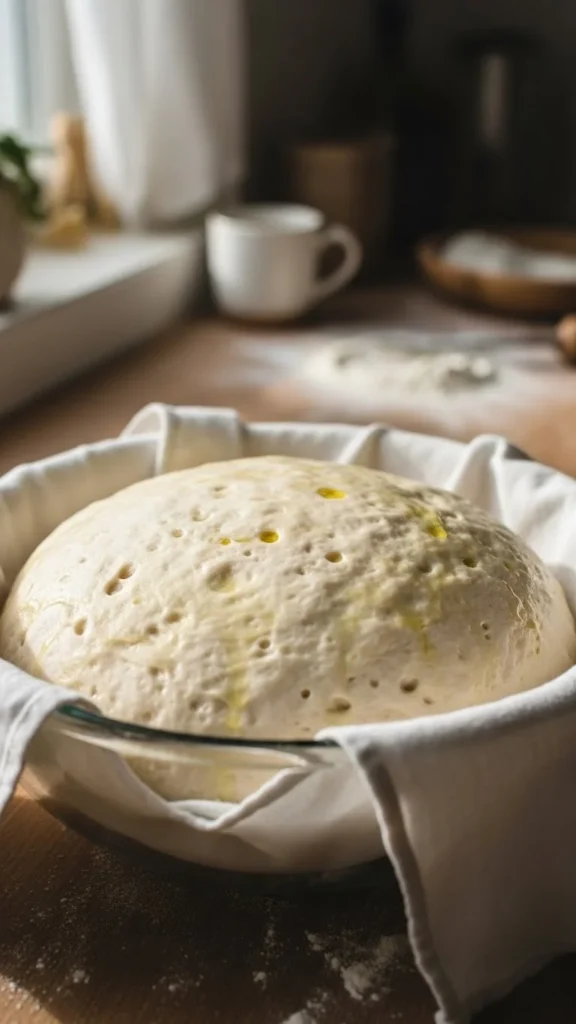
After mixing, let the dough rise slowly if possible—at least 1–2 hours, or overnight in the fridge for deeper flavor and better browning.
Preheat Like a Pro (This Is Non-Negotiable)
One of the biggest mistakes in homemade pizza? An oven that’s not hot enough.
Ideal oven setup:
- Temperature: 475–500°F (245–260°C)
- Preheat time: At least 30 minutes
- Use a pizza stone or steel if you have one
A hot surface jumpstarts crust formation, giving you that golden bottom instead of a limp, doughy base.
No stone? No problem.
Use an upside-down baking sheet and preheat it too—it still helps transfer heat quickly.
Shape the Dough Without Killing the Air
Those bubbles in the crust? You want to keep them.
How to shape pizza dough:
- Gently press dough from the center outward
- Leave the edges slightly thicker
- Avoid rolling pins (they push out air)
If the dough resists stretching, let it rest for 5–10 minutes. Relaxed dough is easier to work with and bakes better.
Sauce, Cheese, and Toppings: Less Is More
Overloading pizza is the fastest way to sabotage your crust.
Follow this balance:
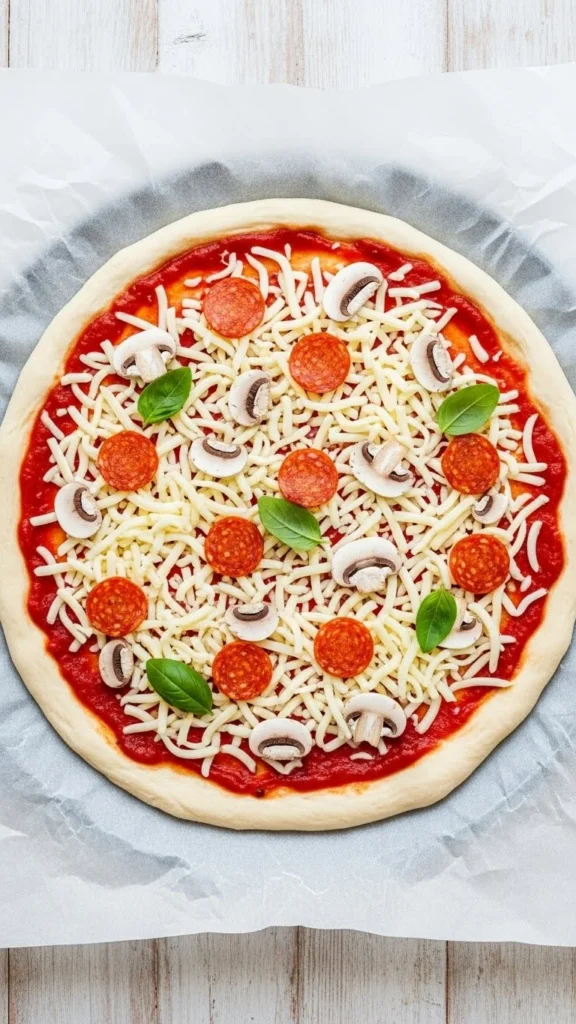
- Thin layer of sauce (no puddles)
- Even, light layer of cheese
- Toppings sliced thin and used sparingly
Too much moisture prevents browning and causes sogginess.
Pro tip:
Brush the exposed crust lightly with olive oil—it enhances color and adds flavor.
Bake for Golden Perfection
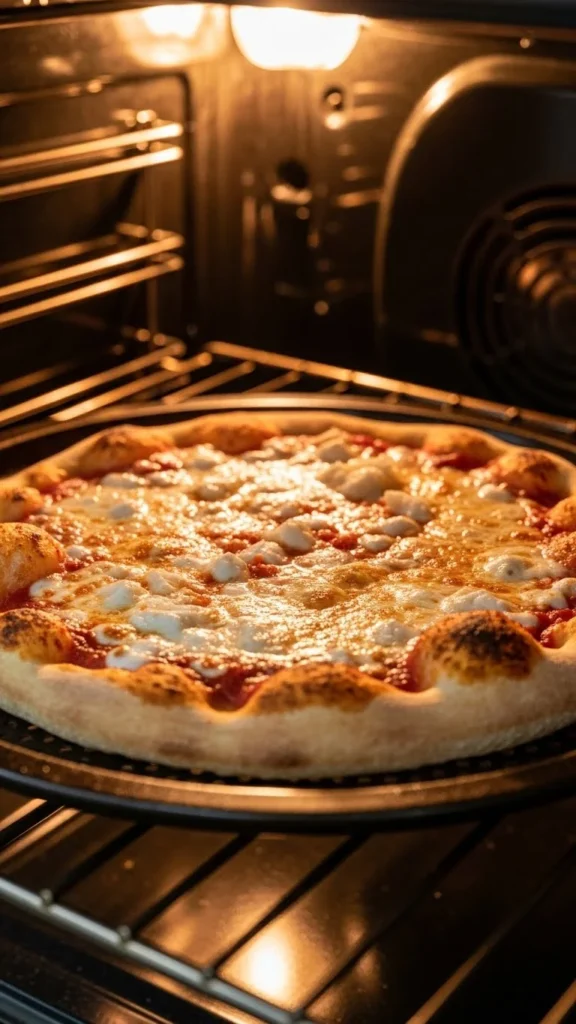
Slide your pizza onto the hot stone, steel, or baking sheet.
Baking guidelines:
- Time: 8–12 minutes
- Rotate once halfway through
- Watch the crust edges closely
You’re looking for:
- Deep golden-brown edges
- Slight char spots
- Firm, crisp underside
If the top browns too fast, move the pizza to a lower rack. If the bottom needs more color, finish directly on the oven rack for the last minute.
Finish Strong With Simple Touches
Once out of the oven, let the pizza rest for 1–2 minutes. This helps the cheese set and keeps the crust crisp.
Optional finishing touches:
- Fresh basil leaves
- Chili flakes
- Drizzle of olive oil or hot honey
- Grated Parmesan
Slice and serve immediately for best texture.

Common Mistakes That Prevent Golden Crust
Avoid these pitfalls for consistently great results:
- Oven not fully preheated
- Too much sauce or cheese
- Cold dough straight from the fridge
- Baking on a cool pan
- Skipping olive oil on the crust
Small adjustments make a big difference.
Final Takeaway: Golden Crust Is a Habit, Not a Mystery
Making homemade pizza with a golden crust every time isn’t about luck—it’s about heat, balance, and patience. Once you dial in your dough, preheat properly, and keep toppings under control, great pizza becomes repeatable.
✨ Save this recipe, pin it for later, and turn your next pizza night into a guaranteed win! 🍕

Leave a Reply